

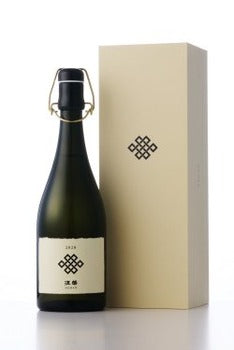
A client favorite, we finally have more of this one after almost a year of waiting, and only a few six-packs remain in the US. Founded in 1832 in Yamagata’s Shonai region, Tatenokawa has spent nearly two centuries pursuing increasingly precise and ambitious expressions of sake, and Nehan Black is one of the brewery’s most fascinating achievements. At the heart of the bottle is Soubewase, an ancient heirloom rice variety that had effectively disappeared from sake production. Tatenokawa recovered seeds from a Japanese seed bank and spent years painstakingly cultivating the variety in its own fields, gradually rebuilding enough stock to brew with it successfully. Soubewase is notoriously difficult to grow and harvest, one of the reasons it was abandoned as the industry moved toward more reliable varieties such as Yamada Nishiki, but that difficulty is also part of what makes it so compelling. Tatenokawa is currently the only brewery cultivating and brewing with the variety, giving Nehan Black a character unlike almost anything else being made in Japan.
Nehan Black was Tatenokawa’s first sake built around Soubewase, taking this nearly lost rice and applying the same obsessive precision found in the brewery’s famous “18”, polishing the grains down to an extraordinary 18% of their original size. It then goes a step further, spending roughly two years in near-freezing cold storage before release, allowing the sake to gain depth, integration and remarkable smoothness without losing its purity or oxidizing. We were immediately struck by how distinctive it was: delicate florals, mineral notes, and crystalline aromas give way to a palate with an almost white-Burgundy-like combination of weightlessness, density, and texture. Soubewase brings surprising richness, but tremendous energy runs underneath, and the finish is extraordinarily persistent, lingering on the palate long after each sip. Tatenokawa describes the rice as producing a more rustic expression, yet Nehan Black is so finely knit and detailed that it creates an incredible dynamic. As more breweries begin looking back toward Japan’s forgotten heirloom rice varieties, bottles like this may represent an important new direction for fine sake. Nehan Black is one of the ultimate expressions of Tatenokawa—combining a virtually extinct rice variety, extreme polishing, and years of painstaking work into one of the most distinctive sake experiences we have encountered.
Tatenokawa Nehan Black Junmai Daiginjo
Tatenokawa Nehan Black Junmai Daiginjo
A client favorite, we finally have more of this one after almost a year of waiting, and only a few six-packs remain in the US. Founded in 1832 in Yamagata’s Shonai region, Tatenokawa has spent nearly two centuries pursuing increasingly precise and ambitious expressions of sake, and Nehan Black is one of the brewery’s most fascinating achievements. At the heart of the bottle is Soubewase, an ancient heirloom rice variety that had effectively disappeared from sake production. Tatenokawa recovered seeds from a Japanese seed bank and spent years painstakingly cultivating the variety in its own fields, gradually rebuilding enough stock to brew with it successfully. Soubewase is notoriously difficult to grow and harvest, one of the reasons it was abandoned as the industry moved toward more reliable varieties such as Yamada Nishiki, but that difficulty is also part of what makes it so compelling. Tatenokawa is currently the only brewery cultivating and brewing with the variety, giving Nehan Black a character unlike almost anything else being made in Japan.
Nehan Black was Tatenokawa’s first sake built around Soubewase, taking this nearly lost rice and applying the same obsessive precision found in the brewery’s famous “18”, polishing the grains down to an extraordinary 18% of their original size. It then goes a step further, spending roughly two years in near-freezing cold storage before release, allowing the sake to gain depth, integration and remarkable smoothness without losing its purity or oxidizing. We were immediately struck by how distinctive it was: delicate florals, mineral notes, and crystalline aromas give way to a palate with an almost white-Burgundy-like combination of weightlessness, density, and texture. Soubewase brings surprising richness, but tremendous energy runs underneath, and the finish is extraordinarily persistent, lingering on the palate long after each sip. Tatenokawa describes the rice as producing a more rustic expression, yet Nehan Black is so finely knit and detailed that it creates an incredible dynamic. As more breweries begin looking back toward Japan’s forgotten heirloom rice varieties, bottles like this may represent an important new direction for fine sake. Nehan Black is one of the ultimate expressions of Tatenokawa—combining a virtually extinct rice variety, extreme polishing, and years of painstaking work into one of the most distinctive sake experiences we have encountered.


